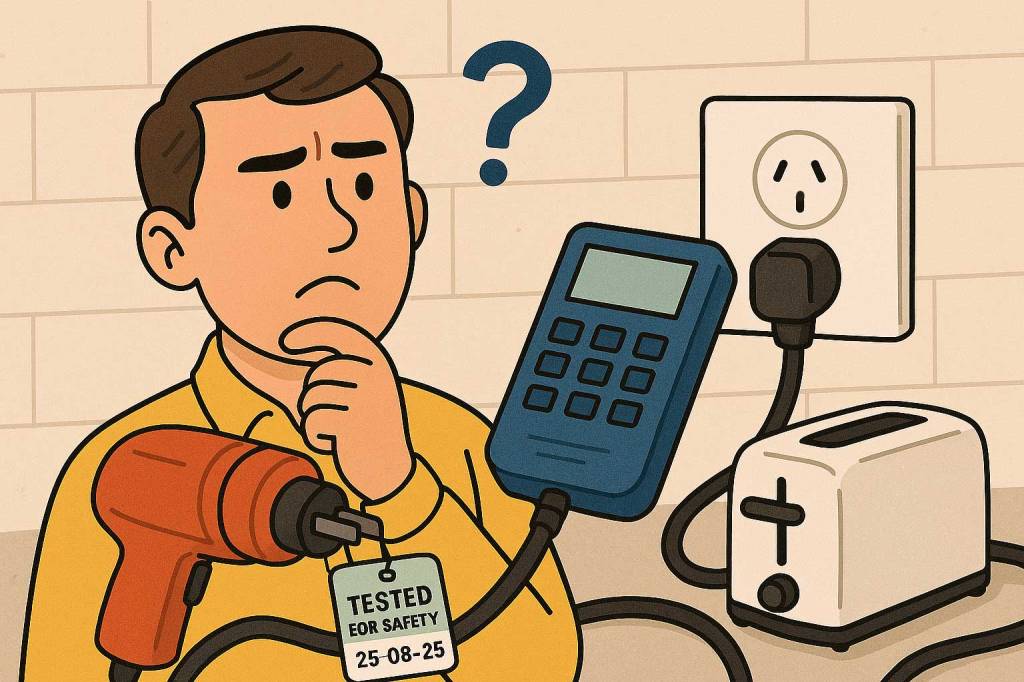
Does your business really need test and tag? The short answer: sometimes it’s legally required, but almost always, it’s worth doing — for safety, reduced equipment downtime, and cost savings.
Read on to find out where your business sits legally, and how the right approach can protect your team and your bottom line.
Some Industries Already Know Their Obligations
Many construction, demolition, and mining businesses in Mandurah and the Peel Region are well versed in their legal obligations. Equipment in these “hostile environments” typically must be inspected and tested every three months to comply with workplace safety regulations.
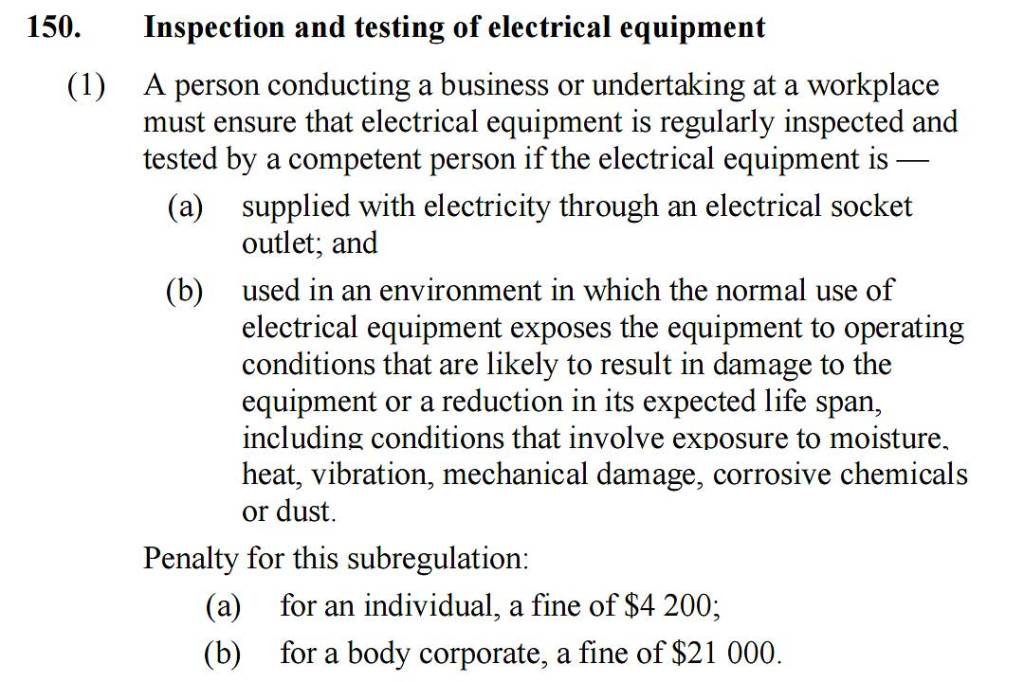
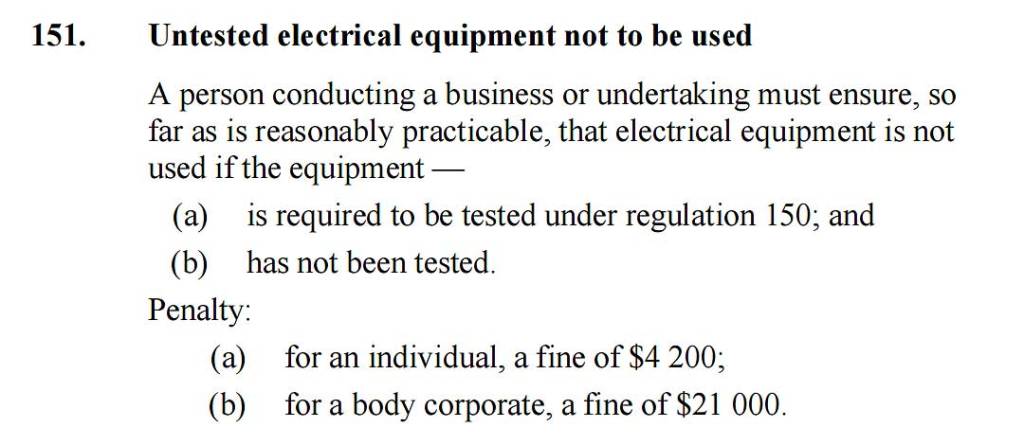
But other industries operating in hostile conditions — like workshops, factories, and commercial kitchens — are often unaware that they are also legally required to regularly inspect and test electrical equipment under Regulations 150 and 151 of the Work Health and Safety (General) Regulations 2022.
Regulation 150 outlines when electrical equipment must be inspected and tested. Image used for explanatory purposes only; source: WA Work Health and Safety (General) Regulations 2022.
Regulation 151 clarifies that equipment cannot be used unless it has been properly tested. Image used for explanatory purposes only; source: WA Work Health and Safety (General) Regulations 2022.
These regulations make it clear that if your equipment is exposed to conditions likely to cause damage, it must be tested — and untagged equipment must not be used.
Compliance isn’t optional in these environments; it’s a legal requirement.
What About Other Businesses?
If your workplace isn’t classified as a hostile environment — think offices, retail stores, or small service businesses — test and tag may not be legally mandatory. That said, there are still strong reasons to implement it:
Duty of care
As a business owner, you are responsible for maintaining a safe workplace. Faulty equipment can lead to injuries, property damage, or even fire.
Insurance considerations
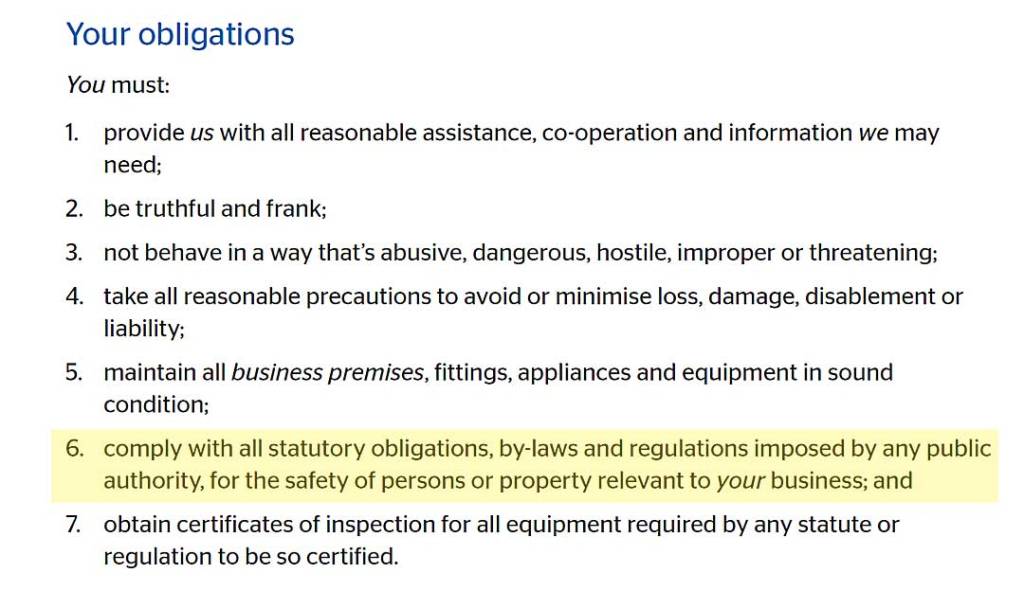
Most business insurance policies, including major providers like QBE, expect businesses to take reasonable steps to maintain a safe workplace and comply with relevant laws.
QBE Small Business Insurance Policy requires compliance with all statutory obligations, by-laws, and regulations. Image used for explanatory purposes; source: QBE Small Business Insurance Policy Wording (freely available at qbe.com/au/business-insurance/small-business/small-business-insurance-policy-documents).
If an incident occurs and equipment hasn’t been properly maintained, insurers could potentially reduce or deny a claim. Regular test and tag can therefore protect your business financially, not just legally.
Even if your business isn’t legally required to test and tag equipment, doing so is a smart investment in safety, continuity, and financial protection.
Benefits of Test & Tag (Even When Not Mandatory)
Beyond compliance and insurance, regular test and tag offers tangible benefits for any business:
✅ Peace of mind
Know your team and clients are safe.
✅ Reduced downtime
Catch faulty equipment before it fails, keeping operations smooth.
✅ Financial savings
Avoid emergency repairs or replacement costs by addressing issues proactively.
✅ Professional image
Demonstrate to clients and staff that safety is a priority.
Take Control of Your Business Safety and Compliance
At ElecCheck, we help Mandurah businesses understand their obligations and implement a testing schedule that is safe, practical, and cost-effective. Compliance doesn’t have to be complicated — it can be a simple step toward a safer, more professional, and financially smarter business.
Unsure whether your business falls under these regulations, or how often your equipment should be tested? Get in touch with ElecCheck today. We provide clear, practical advice and help keep your workplace safe without disrupting your day-to-day operations.

 ElecCheck
Leave a comment